
401(k) vs. 403(b): What’s the Difference and Why Does It Matter?
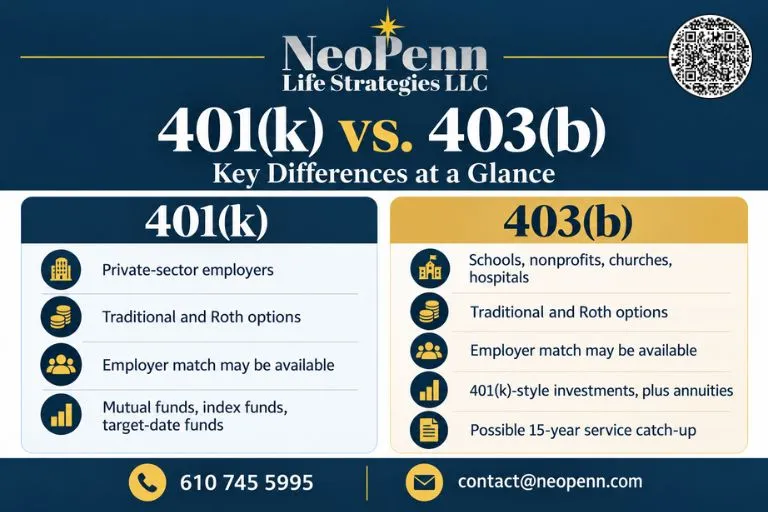
When it comes to saving for retirement, two of the most common employer-sponsored plans are the 401(k) and the 403(b). At first glance, they can look almost identical. Both let you contribute money directly from your paycheck, may offer traditional and Roth contribution options, and can play an important role in building long-term retirement savings.
The biggest difference is usually not how the plans work, but who offers them.
What Is a 401(k)?
A 401(k) is an employer-sponsored retirement plan most commonly offered by private-sector companies. Employees can choose to contribute part of their salary into the plan, generally on either a pre-tax or Roth basis if the plan offers both options.
With traditional pre-tax contributions, the money generally reduces your taxable income in the year you contribute. Taxes are typically due when you withdraw the money later. Roth 401(k) contributions are made with after-tax dollars, while qualified Roth distributions can generally be received tax-free.
Employers may also contribute through matching or other employer contributions, depending on the specific plan.
What Is a 403(b)?
A 403(b) works much like a 401(k), but it is generally available to employees of public schools, certain nonprofit organizations, churches, hospitals, and other qualifying tax-exempt organizations.
Employees may make payroll contributions, and employers may also provide matching or other contributions. Depending on the plan, investments may include mutual funds, annuity contracts, or other permitted options.
The Contribution Limits Are Very Similar
For 2026, the basic employee elective deferral limit is $24,500 for both 401(k) and 403(b) plans. Employees age 50 and older may generally be eligible for additional catch-up contributions. When employer contributions and other qualifying contributions are included, separate overall annual contribution limits also apply.
One Special Feature of Some 403(b) Plans
Certain 403(b) participants may have an additional opportunity that is not generally available through a traditional 401(k). If the plan permits it, an employee with at least 15 years of service with the same qualifying employer may qualify for a special 403(b) catch-up contribution. Eligibility rules and calculations can be complex, so review them carefully with the plan administrator or a qualified tax professional.
Employer Matching Can Make a Big Difference
Whether you have a 401(k) or a 403(b), pay close attention to your employer’s contribution. Some employers will match part of what you contribute. For example, an employer may contribute a certain amount for every dollar you contribute, up to a specified percentage of compensation. If a match is available, it's important to understand the formula. If you contribute less than the amount needed to receive the full employer match, you may be leaving part of your compensation package unused.
Also review the plan’s vesting schedule. Your contributions generally belong to you, but some employer contributions may require you to stay with the organization for a specified period before they fully vest.
Investment Options May Be Different
This is one area where comparing the actual plan matters more than comparing the labels “401(k)” and “403(b).” A 401(k) may provide a menu of mutual funds, target-date funds, index funds, company stock, or other investments. A 403(b) may offer mutual funds, but some plans rely more heavily on annuities. The IRS specifically recognizes annuity contracts, mutual-fund custodial accounts, and certain retirement income accounts as possible 403(b) arrangements.
Neither structure is automatically better. Instead, look at the investment choices, expenses, administrative fees, surrender provisions, diversification opportunities, and long-term performance characteristics available in your plan.
Fees Matter More Than Many People Realize
Retirement plans can look similar while carrying very different costs. Investment expense ratios, administrative fees, advisory fees, annuity expenses, and other charges can affect long-term accumulation. Even seemingly small annual differences can grow significant when compounded over 20 or 30 years. Before choosing investments, understand not only what you are investing in but also what you are paying to own it.
Traditional or Roth?
Both 401(k) and 403(b) plans may offer traditional and Roth contribution options, although the availability depends on the employer’s plan. With a traditional contribution, you generally get the tax benefit today and pay ordinary income tax when you withdraw the money. With a Roth contribution, you pay taxes on the income today, but qualified distributions may generally be tax-free later. The better option is based on factors including your current tax bracket, expected future tax situation, time until retirement, other retirement assets, and overall tax strategy. For some people, having both pre-tax and Roth retirement assets can provide additional flexibility later in life.
What Happens When You Leave Your Employer?
Leaving a job does not necessarily mean you lose your 401(k) or 403(b). Depending on your circumstances and plan rules, you may be able to leave the money in your former employer’s plan, roll it into a new employer’s eligible retirement plan, roll it into an IRA, or take a distribution. Each choice can have different consequences for taxes, investment options, fees, creditor protection, withdrawal flexibility, and long-term planning.
Cashing out a retirement account simply because you changed jobs can be particularly costly because taxes and potential early-withdrawal penalties may apply, and you lose the opportunity for continued tax-advantaged growth.
401(k) vs. 403(b): Is One Better?
For most employees, the question is not really “Which one is better?” You usually receive whichever type of plan your employer provides. A more useful set of questions is: Am I contributing enough? Am I receiving the full employer match available to me? Do I understand what I am invested in? What am I paying in fees? Should some of my contributions be Roth? And does this retirement account fit with the rest of my financial roadmap?
Those questions can have a much greater impact on your retirement than the number printed after the section symbol in the plan’s name.
Your Retirement Plan Is Only One Piece of the Picture
A workplace retirement plan can be a powerful wealth-building tool, but retirement planning goes beyond putting into a 401(k) or 403(b). Emergency savings, debt management, taxes, Social Security, healthcare expenses, insurance protection, long-term care considerations, estate planning, and sources of retirement income can all affect the overall strategy. The objective should not simply be to accumulate the largest retirement account possible. It should be to build a financial structure that can support the life you want throughout retirement.
Take the Next Step
If you have a 401(k) or 403(b), take a few minutes to review your most recent statement. Look at your contribution percentage, employer match, investment allocation, fees, beneficiaries, and whether your plan offers traditional and Roth options.
You may be surprised by how much information is in a retirement account you've contributed to for years.
Do you have questions about how your workplace retirement plan fits into your wider financial strategy? Contact NeoPenn Life Strategies LLC to start the conversation.
This material is provided for general educational purposes only and is not intended as individualized investment, tax, legal, or retirement plan advice. Plan provisions vary by employer. Consult your plan administrator and appropriate licensed financial, tax, or legal professionals regarding your individual circumstances.